Symmetry is one of the rarely-referenced parts of TTRPG Design. You'll hear about balance the most - that is, how the choices made for player characters compare to each other. Symmetry, in this context, is how the system looks from either side of the table - from the players' perspective and from the gamemasters' perspective. This is before anyone has sat down at the table (literal or virtual), before the characters are created. It's not something that can be easily fixed by any one group or table, because it's a series of assumptions baked into the design of the system at it's core.
A Symmetrical system is one where the players and game master are governed by the same collection of assumptions. This isn't specifically about the resolution system (in most cases, that's going to be relatively the same across the board) but about how the people playing the game relate to the game itself. The most stark example of this, to me, is "3.P" - that is, the blend of D&D 3 & "3.5", and the Pathfinder 1e offshoot of that system.
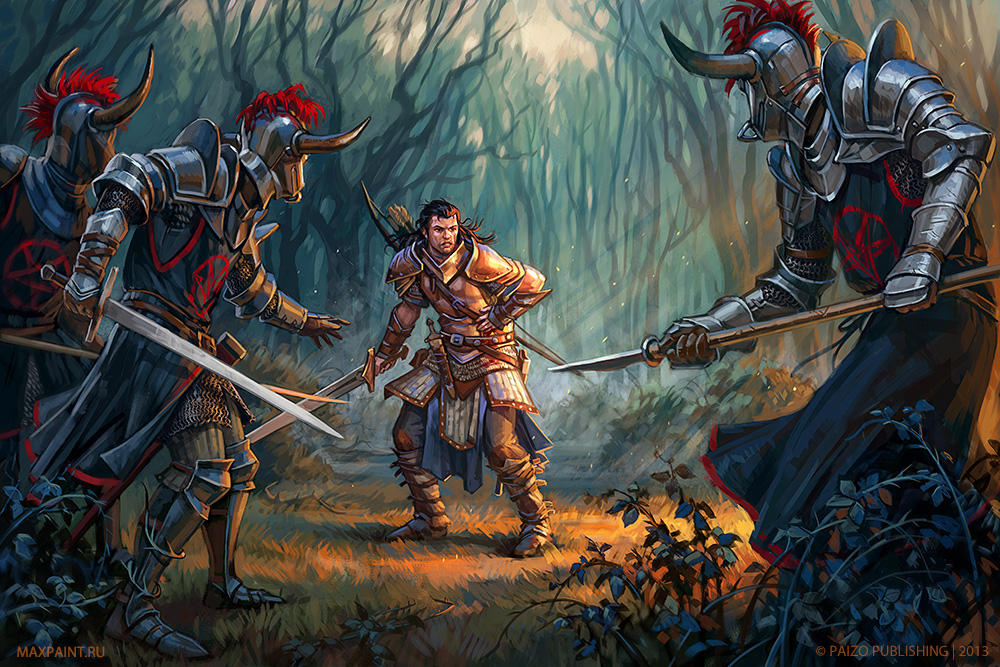
In Symmetrical systems, everyone is approaching things the exact same way. When a player creates a character, they do the normal character creation things in a D&D-like: create stats, select things like class, race, background, class features, feats, spells, and equipment. That's a well known setup. The Game Master, when they're creating a non-player character, does the exact same thing. This seems relatively straightforward, and almost common sense. The problem lies in the imbalance of work between those two people. A player creates a character slightly more than once per game, on average - maybe slightly more in a particularly lethal system or unlucky streak. The GM, however, is populating the rest of the 'world' those PCs are playing in - each bandit, each beast, each guard, everybody. That's where the system breaks down... Where you have each minion, lieutenant and wandering monster that has a complete stat block, complete with feat chains, equipment, spells (or supernatural abilities) and maybe even class levels.
Example NPC from Technoir
This problem is then multiplied beyond belief because of the sheer amount of content that was created for the system. There were so many supplements and additional texts for these games (that didn't all communicate with each other, as there were multiple different publishers) that the norm for players to be limited to two core books and only one supplement... But no such limit for the GMs, which had an ever-expanding library in which to draw from.
Having Symmetry isn't a D&D exclusive thing, either. The World of Darkness games, Technoir, and several of the d100 games are all symmetrical.
So what does an Asymmetrical system entail? That would be one where the system works differently for the GM then for the player. My favorite example for this is the Cypher System. Also a d20 system, Cypher doesn't have the GM roll dice at all - when the players engage with the world, they roll to effect it; when the world effects the player characters, those PCs roll to evade or otherwise endure it. Because of this, they're created in completely different ways. Each Player Character has 3 pools to represent their stats, but each monster or non-player character is mostly contained in a single number. This creature is a level 4 character, so to hit it, you need to roll at or above a 12 (as everything in Cypher is in sets of 3); to find it when it's hiding, roll a 12; if it's attacking you, you have to roll a 12 to get out of the way. There's a bit more to it than that - you might have a particularly stealthy creature that is a step up in difficulty if it's sneaking, or a particularly large, powerful creature that counts as a lower level when being attacked, because they're so big.
This type of resolution system is very common in the more narrative-focused games. The Powered By the Apocalypse (PbtA) and Blades in the Dark (BitD) systems are probably the most well-known of this type of game. The resolution system of those includes degrees of success, and the GM makes their "move" when the dice say that they fail. There are some systems that are somewhat asymmetrical, like the relatively new Daggerheart - the players have relatively complex setups and use a 2d12+mod roll-over system, while the GM uses more simplified stats and a d20+mod roll-over.
The benefits of an Asymmetrical system is that by simplifying some of the game, that frees up the GM to focus on other parts of the game. It also speeds up the game - There is no "mother may I" back and forth with the GM. That is the "Roll, Add, Declare Total to GM, GM says yes or no, React" flow that trad-RPGs are built around. Rolling an Asymmetrical System means whoever is rolling can look down and instantly know exactly where they land.
Between the two, I am 100% going to make this system asymmetrical.
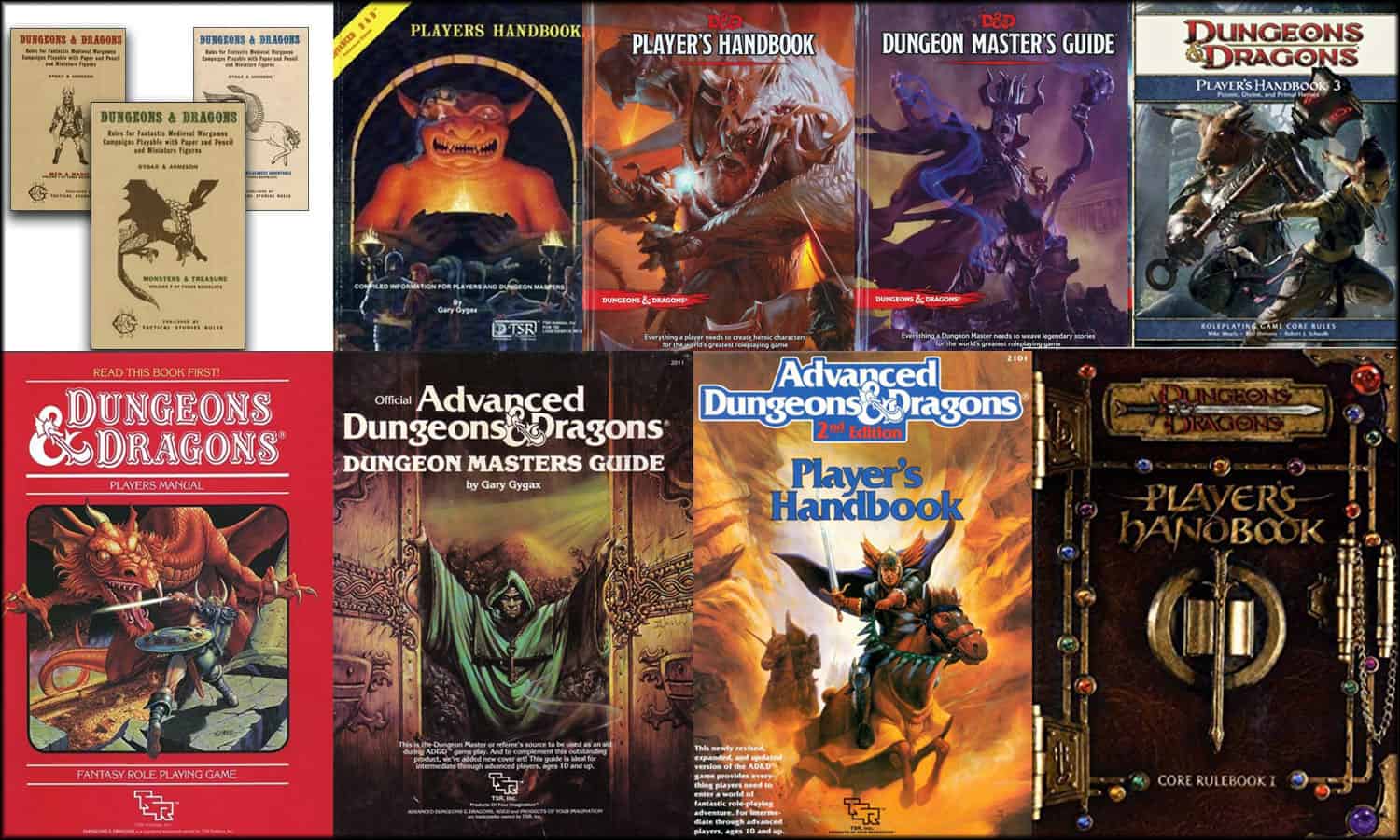
Dungeons and Dragons is easily the biggest name in the TTRPG space. The original D&D, Gary Gygax and Dave Arneson's 1974 release was a sequel to Gygax's previous work Chainmail (1971) as well as Avalon Hill's Outside Survival, changing the simulationist wargame into a system of individuals fighting in a fantasy world. The system was full of inconsistencies, and was heavily modded and discussed for 15 years in the social media of the 70s - the zine. Those changes got collected by Gygax in 1989 with AD&D 2nd edition. If you're interested in the history of the early editions of the hobby, check out this amazing (albeit long) video from gaming legend Matt Colville giving a breakdown of Jon Peterson's The Elusive Shift (2002):
In the year 2000, 3rd edition came in and created the style of D&D that we're most connected to today - the D20+mod roll-over system, modern interpretations of terms like "difficulty check" & "armor class", the beginnings of a standardized setup for what a creature stat block or spell looks like. D&D 4th edition, in 2008, took that standardization even further - streamlining all character classes (and creatures!) and abilities into discrete chunks, making things very precise with "game-y" language, instead of the more narrative style text. This wasn't particularly popular, and caused the creation of Pathfinder, which was an extension of the 3.5 modified rules by a different company. 5th edition came out in 2014, keeping some of the streamlining that was introduced in 4th edition, but otherwise reverted back to the more familiar 3rd edition differentiation. That ruleset was supposed to be rebooted in 2024, but the changes were relatively mild, leaving some existing issues open, while creating brand new ones. Even now, erratas are being leveled on the brand new edition as it came out with a whimper.
The various D&D editions have a couple really interesting things that have kept it in the public eye. First, there's a ton of content - the simple inertia the biggest game stays the biggest because it was always the biggest. There are now decades of adventures, classes, spells, settings, monsters and everything else - while the various editions and spin-offs are slightly different in execution, they're always close enough for reference. The gaming license allowed 3rd-party publishers to also be churning out content. Secondly, with all of the issues that the game has, the core concept is pretty simple - you follow the directions, create a character of a bunch of numbers, then most things come down to "roll a d20, and add that number". Finally, it kept the core conceit of the hobby with the Tolkien-style Fantasy adventuring, while opening the system up to a wider public, inspiring multiple executions into superheroic and scifi settings.
Pros:
It's relatively simple. It's usually simple addition of a static number and a number no bigger than 20.
5th Edition combatted the "modifier bloat" from previous editions by boiling it down to Advantage (Roll twice, take the highest) and Disadvantage (Roll Twice take the lowest).
D&D is so enmeshed in the cultural zeitgeist that the average person just "gets" it to a certain extent. The wizard acts wizard-y, the Barbarian smashes stuff, the fighter fights, the rogue sneaks, etc. The average enjoyer of fantasy media will have enough information to piggyback off of to get into the vibe.
It's also the game that is most tied to RPGs in the media - it's own blockbuster movie (in 2023, not the hilariously bad bomb in 2000) and the animated series Legends of Vox Machina, references in shows like Community, Gravity Falls and Stranger Things, emulated in video games (Knights of the Old Republic, Divinity: Original Sin, the Baulder's Gate and Neverwinter series), and is publicly adopted by celebrity actors like Vin Diesel, Deborah Ann Woll, and Joe Manganiello.
The popularity of the game has created an entire ecosystem of third-party products and accessories. Beyond the expected items like dice and character sheets, there are trackers, cards, condition markers, swag (like pins stickers, shirts and other apparel), digital apps, dice towers, miniatures, battle map miniature accessories (like terrain and dungeon tiles), and DM screens that are available for any price point, from cheap & plasticky all the way up to high-quality hardwood.
Cons:
The games are heavily powered by the GM. The Creature Level system falls apart beyond a certain level, the economy leaves a lot to be desired, and while there are many adventures that are created for the systems, they are wildly inconsistent in description and how to interact with when the players go "off script".
As mentioned in the above embedded video - there's no one 'correct' way to play D&D. Some tables are there for the thrilling heroics where the players are awesome all the time, others are gritty survival games where each pound, arrow and torch is important; Some games contain deep & narrative roleplay involving politics and intrigue, while others are just playing tabletop Diablo, hacking and slashing to paint the town red. Going into a game with a new group blind, you have no idea what you are getting into.
Dungeon Master's Guide, 2014
There isn't really a definitive way to determine how hard something abstract is. For creatures it's relatively straightforward - their stats and equipment determine things like their Armor class or how well they shrug off psychic influence. But for traps, hazards, and more off-the-cuff encounters (jumping from a moving carriage, clinging to the side of a wall, etc) are left completely open. There are suggestions (to the right) but it's completely arbitrary - is jumping off a horse to tackle someone medium or hard? Very hard? It is completely arbitrary. And doesn't scale well - an average player character begins with a +4 in something they're half-decent in, but can end beyond +9 without serious investment. Things you're proficient in gain a +2 to +6 over time with a 0 in the stat, and between expertise and stat modifiers, can get up to +17.
The way the game is created, it's very reference-intensive and segmented. There's very little freestyling and remixing available in the game - if you're going to be a barbarian, here are the 4 barbarians you can be. If you choose this background, you get these skills. If you're playing a caster, you have X number of spells available that you must pick from this limited list. If all players have a comfortable understanding of the system, and access to tools either online or their own books, this is great. But nothing makes me cringe more than a new player picking up a druid - Not only do you have your own race, background, skills, equipment and spells to choose, you should look over all of the possible creature stat blocks you can transform into! The previous editions of the game also had the wildly annoying habit of making individual classes gain features at different levels. This was finally corrected in the 2024 "5.5" edition, tying subclass advancement to levels 3, 6, 10 and 14, and class advancements in all of the others.
In a very new-player-facing way, it is a game that seems to require a large financial investment. A casual perusal of what is available can be overwhelming - dozens of books, legions of miniatures, dice sets costing over $50, and professional-quality gaming tables made for RPGs and board games that cost thousands of dollars. DnDBeyond, the official app from the creators of the game Wizards of the Coast, requires either a monthly subscription to use, or for players to pay for each digital book at about the same price as a print book. Someone who is in the hobby knows that all of those are frivolous and extra, and the game can be played using the cheapest dice and scrap paper, but someone looking in from outside, it looks an unscalable wall.
Lastly, the popularity of the system's name has gotten so ubiquitous that it tends to suck the air out of the room. People new to the hobby don't want to play "Tabletop Role-Playing Games", they want to play D&D. This is a giant issue for anyone wanting to find new players for smaller systems, as the bulk of players want to only play the "real thing" and not other systems, even though another system might be more appropriate for the story at hand. In addition, there are massive amounts of terrible information all over the internet that is D&D related - bad takes on forums and Reddit, giant databases of hilariously unbalanced homebrew on websites like DnDWiki - while WotC tries to keep their IP as far behind a paywall as possible, so it's really easy for a quick google search to take a curious new player down a completely idiotic rabbit hole.
What we're going to borrow from D&D:
Honestly, not much. While it is easily the system I know the most about, it's much more like a 50-year version of the quote "I have not failed - I've just found 10,000 ways that won't work" that is attributed to Thomas Edison. Some of the things I would want to avoid would include
Leaving Abstract issues up to the GM discretion
Refusing to flesh out world-building elements like economics & crafting
Requiring the players to look up multiple references to get simple things done.
Containing interesting mechanics that are locked behind specific subclasses
Limiting the players' interpretation of magic or ingenuity to a tighter list.
The Advantage/Disadvantage mechanic as a way to easily give a bonus is probably the most applicable thing that can be ported over to other games. While it was used in the system to combat a bloat of modifiers, it also caused a new problem - nothing stacks. If I have advantage from one boon based on circumstances, spells, or something else, there's no point in trying to use another ability to get more of an advantage.
I want to fix the RPG space. I know it's a fool's errand, as the RPGs are as diverse and varied as the people who play them. But I've played a bunch, been the game master of a bunch of them, read even more, and I think I have some ideas.
Instead of putting another hack of another system on the books, I think I'll walk through my thought processes and figure out how to make the perfect RPG. For me, at least.
Pile of Books, Baulder's Gate 3
We all have to start somewhere. For me, it was video games first, then being in introduced to Pathfinder 1e and Geist: the Sin-Eaters in my early 20s by some guys at the call center I was working at. Since then I was a GM for Dungeons & Dragons 5th edition and Pathfinder 2e, have played Vampire: the Masquerade, Kobolds Ate My Baby, Ten Candles, and am helping my wife run Old Gods of Appalachia, which uses the Cypher System.
A myriad of different systems, different themes. I've read through dozens of others, and found many things lacking, but good stuff all over. I'm thinking I can take the strengths of certain systems and mix them together without the weaknesses and make something new.